









For decades, the image of African governance was predictable: long queues at government offices, paperwork lost in piles, citizens traveling hours to submit applications that would take months to process. Corruption flourished in the gaps between services. Accountability was nearly impossible when records existed only on paper.
Technology is changing that.
Across the continent, governments are digitizing. In Uganda, the Uganda Revenue Authority now processes taxes online. The National Identification and Registration Authority has created a digital identity system. The e-Government Interoperability Framework (e-GIF) aims to connect databases across agencies so citizens do not need to submit the same documents repeatedly.
But as Uganda and its neighbors race toward digital governance, important questions emerge: Who owns citizen data? How do we prevent digital exclusion? Does technology actually reduce corruption—or simply move it to new platforms?
The Promise: What Digital Governance Can Achieve
Efficiency and Transparency
When government services move online, several benefits follow:
| Benefit | How It Works |
|---|---|
| Reduced corruption | Automated systems do not ask for “facilitation fees” |
| Faster service delivery | No physical queues, no lost files |
| Data-driven decision making | Governments can see patterns and plan accordingly |
| Citizen convenience | Services available anywhere with internet |
| Accountability | Digital trails make oversight possible |
Estonia, often cited as the world’s most advanced digital society, has shown what is possible. Its citizens can vote, file taxes, access medical records, and sign documents digitally—all with a single digital ID. The country estimates that its e-governance system saves over 2 percent of GDP annually in time and resources.
Africa does not need to copy Estonia. But the principle is transferable: technology can make government faster, cheaper, and more accountable.
Real Examples Across Africa
| Country | Innovation | Impact |
|---|---|---|
| Kenya | M-Pesa (mobile money) | Brought financial services to millions without bank accounts |
| Rwanda | Irembo (e-services portal) | Citizens access 100+ government services online |
| Nigeria | TSA (Treasury Single Account) | Consolidated government revenues, reduced leakage |
| Uganda | UGHub (data integration) | Real-time data sharing across government databases |
| South Africa | eNAVIS (health records) | Digital patient records for HIV/TB treatment |
These examples prove that digital governance is not a Western concept imposed on Africa. It is an African reality, built by Africans, for African problems.
The Peril: Risks We Cannot Ignore
The Danger of a “Data Colony”
As African governments digitize, a troubling pattern emerges. Much of the continent’s data is stored, processed, and controlled by foreign companies. Cloud servers are located outside Africa. Algorithms used for decision-making are developed elsewhere, trained on non-African data, and optimized for non-African contexts.
Ugandan experts at the third Deep Tech Summit in Kampala warned that the country risks becoming a “data colony” —where local data is controlled, extracted, and monetized by external actors without sufficient benefit to Ugandans.
James Byaruhanga, managing director of Roke Cloud, noted that while Uganda has about 6,600 kilometers of national fiber and internet penetration around 70 percent, major gaps remain in rural connectivity and high-performance computing infrastructure.
What this means: When a Ugandan citizen applies for a government service online, their data may travel to servers in Europe or America. Foreign companies may profit from insights derived from that data. And Uganda has little control over how that data is used or protected.
Digital Exclusion
Not every Ugandan has a smartphone. Not every village has internet. Not every elder understands how to navigate a digital portal.
If government services move entirely online, those without access are excluded. The poor, the elderly, the rural—the very citizens who most need government services—risk being left behind.
This is why Uganda’s Service Uganda Centres in Gulu, Mbarara, and Tororo are critical. They provide physical locations where citizens can access digital services with human assistance. But three centres are not enough for a country of 45 million people.
Surveillance and Privacy
Digital governance creates digital trails. Every transaction, every application, every interaction leaves a record. In the wrong hands, this data can be used for surveillance, political targeting, or discrimination.
Uganda’s Data Protection and Privacy Act of 2019 provides a legal framework for protecting citizen data. But enforcement remains weak. Many citizens do not know their rights. And government agencies do not always follow the rules.
The question is not whether governments will collect data. They will. The question is: Who watches the watchers?

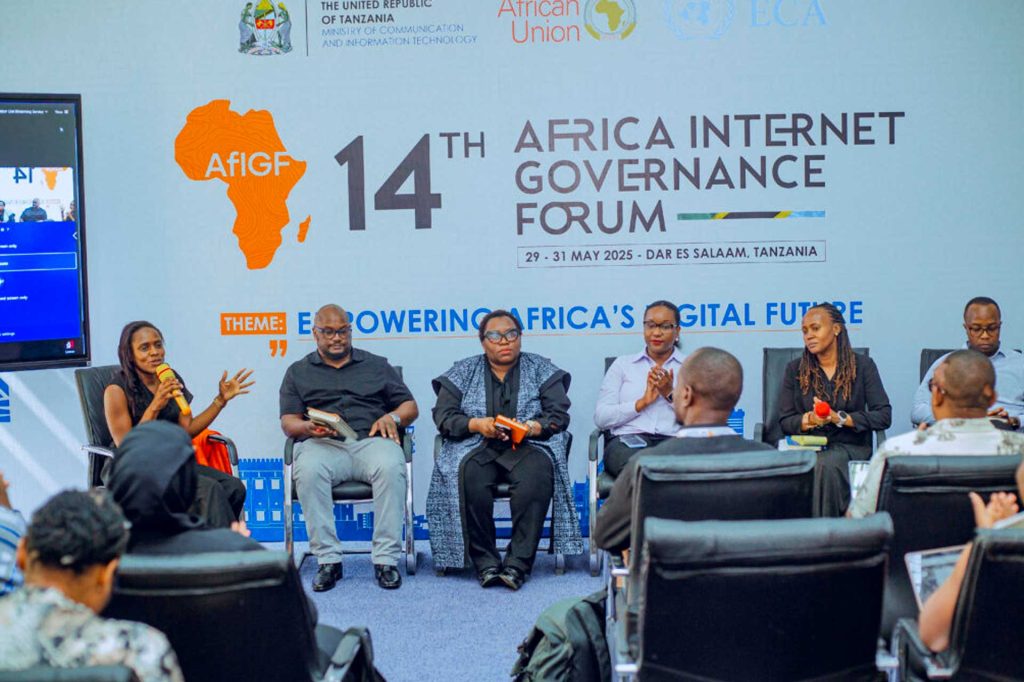
The Governance Challenge: Making Technology Work for Citizens
What Uganda Must Do
| Priority | Action Required |
|---|---|
| Local data infrastructure | Invest in local data centers and cloud capacity |
| Digital literacy | Train citizens to use and protect their data |
| Inclusive design | Ensure services work offline and for low-literacy users |
| Privacy enforcement | Strengthen implementation of data protection laws |
| Open data | Make government data available for public scrutiny |
The Role of Civil Society
Technology alone does not create accountability. Citizens must demand it. Civil society organizations, journalists, and engaged citizens must learn to use digital tools to monitor government.
Examples exist. In Uganda, the Uganda Debt Network uses technology to track public procurement contracts. BudgIT Uganda simplifies budget data for ordinary citizens. These organizations show that digital tools can empower citizens, not just governments.
Finding the Balance
Technology is not a magic solution for governance challenges. It does not automatically reduce corruption, improve efficiency, or build trust. It can do all of these things, but only when implemented thoughtfully, inclusively, and accountably.
The countries that will succeed in the digital age are not necessarily those with the fastest internet or the most advanced algorithms. They are those that understand that technology is a tool, not a strategy.
The strategy must be about people: training citizens to use digital tools, protecting their data, ensuring no one is left behind, and using technology to build trust between the governed and those who govern.
Uganda has made progress. The Digital Uganda Vision, the National Development Plan IV, and initiatives like UGHub and the Service Uganda Centres are steps in the right direction.
But the journey is long. And the destination is not a fully digitized government. It is a government that serves all citizens—online and offline, rich and poor, urban and rural—with efficiency, transparency, and accountability.
Technology can help us get there. It cannot get us there alone.
What has been your experience with digital government services in Uganda? Have they made your life easier or created new frustrations? Share your thoughts in the comments below.


