









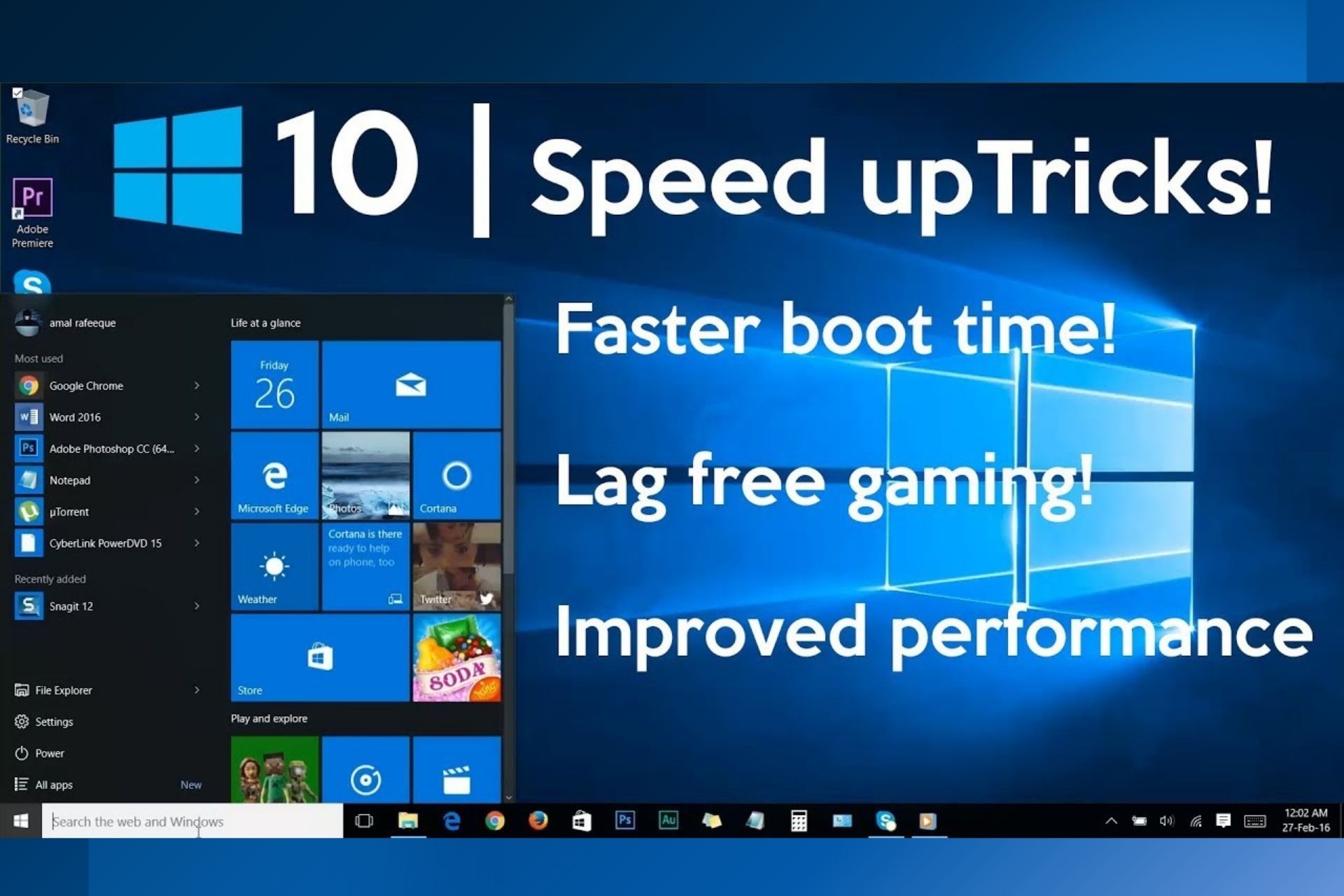
No software purchases needed—just practical steps that actually work
Few things are more frustrating than a slow computer. You click. You wait. You click again. Nothing happens. Your patience runs out.
Before you give up or rush to buy a new computer, know this: most slow PCs can be fixed for free. You do not need expensive software, technical skills, or computer parts. You just need to know where to look.
This guide covers seven free methods that work on Windows 10 and Windows 11. Try them in order. Most people see improvement after steps 1, 2, and 3.
Method 1: Restart Your Computer Properly
This sounds too simple, but it works.
Many people never actually shut down their computers. They close the laptop lid or press the power button to sleep. Weeks or months later, the computer becomes slow because background processes have piled up.
What to do:
- Click Start → Power icon → Restart (not Shut Down)
- Restart clears temporary memory and stops stuck processes
How often: Once every 2–3 days minimum.
Why Restart is better than Shut Down: Windows has a feature called Fast Startup that makes Shut Down act like hibernation. Restart forces a true fresh start.
Method 2: Remove Startup Programs
This is the single most effective speed fix.
Every time you turn on your computer, many programs automatically start. Some you use daily. Others you forgot existed. Each one steals memory and processor power.
How to stop them:
- Press
Ctrl + Shift + Escto open Task Manager - Click the Startup tab (or Startup apps on Windows 11)
- Look at the Status column
- Right-click any program with “Enabled” status that you do not need immediately
- Select Disable
What to disable safely:
- Spotify, Zoom, Skype, Discord, Slack
- Adobe updaters, Java updaters, printer software
- Microsoft Teams, OneDrive
- Any program with “Helper” or “Assistant” in the name
What to keep enabled:
- Your antivirus (Windows Security, Kaspersky, etc.)
- Graphics drivers (NVIDIA, AMD, Intel)
- Touchpad or special function key utilities
Test the difference: Restart your computer after disabling startup programs. You will see faster boot time and smoother operation.
Method 3: Delete Temporary Files
Windows collects junk files constantly. Browser caches, leftover installation files, error reports, and thumbnails all take up space. When storage fills up, everything slows down.
Quick method (Disk Cleanup):
- Type Disk Cleanup in the Start menu search
- Select your main drive (usually C:)
- Check all boxes
- Click OK
Deeper method (Manual deletion):
- Press
Windows + Rkey - Type
tempand press Enter → Delete everything inside - Press
Windows + Ragain → Type%temp%→ Delete everything - Press
Windows + Ragain → Typeprefetch→ Delete everything
Some files will not delete. That is normal. Just skip them.
How often: Once per month.
Method 4: Uninstall Unused Programs
Every program takes storage space. Many also run background processes that consume memory and processing power.
How to find and remove them:
- Right-click Start button → Installed apps (Windows 11) or Apps & features (Windows 10)
- Scroll through the list
- Ask yourself: “Have I used this in the last six months?”
- If no, uninstall it
Common programs to remove:
- Pre-installed games (Candy Crush, Minecraft, etc.)
- Multiple browsers (keep one or two, remove the rest)
- Old antivirus trial versions
- PC “cleaner” or “optimizer” apps (many are fake or useless)
- Software that came with an old printer or scanner
Method 5: Turn Off Visual Effects
Windows looks beautiful because of animations, shadows, transparency, and fading effects. Each one uses system resources. On a slow PC, beauty comes at a performance cost.
Switch to performance mode:
- Type “View advanced system settings” in the Start menu
- Under Performance, click Settings
- Select Adjust for best performance
- Click Apply → OK
Your computer will look like older Windows (flat, no shadows, no animations). It will run noticeably faster.
If you cannot stand the old look: Select Custom and keep only these:
- Smooth edges of screen fonts
- Show thumbnails instead of icons
- Use drop shadows for icons on the desktop
Method 6: Disable Background Apps
Many apps run in the background even when you never open them. Weather apps, news apps, Xbox services, and mapping apps constantly check for updates.
On Windows 11:
- Go to Settings → Privacy & security → Background apps
- Turn off “Let apps run in the background” completely
On Windows 10:
- Go to Settings → Privacy → Background apps
- Turn off “Let apps run in the background”
What this affects: Apps like Mail, Calendar, News, Weather, and Xbox will not update automatically. Core functions like web browsing, documents, and email in browser work normally.
Method 7: Run Built-in Maintenance Tools
Windows has two powerful maintenance tools that most people never open.
Tool 1: Storage Sense (Windows 11)
- Go to Settings → System → Storage
- Turn on Storage Sense
- Click Run Storage Sense now
- Set it to run weekly
Tool 2: Optimize Drives (Defragmentation)
- Type “Defragment and Optimize Drives” in the Start menu
- Select your main drive (C:)
- Click Optimize
This reorganizes files so your computer can read them faster. Do this once per month.
Bonus Method: Check for Viruses (Free)
Slow performance is sometimes caused by hidden malware. Windows Security is completely free and built into Windows.
Run a full scan:
- Type “Virus & threat protection” in the Start menu
- Click Scan options
- Select Full scan
- Click Scan now
This takes 1–2 hours. Start it before lunch or before bed.
What If Nothing Works?
If you tried all seven methods and your PC is still frustratingly slow, you have three free options left:
Option 1: Reset Windows (Keep your files)
- Type “Reset this PC” in the Start menu
- Click Reset PC
- Select Keep my files
- Choose Cloud download or Local reinstall
This reinstalls Windows while preserving your documents and photos. It takes 1–2 hours but often fixes deep software problems.
Option 2: Check your hard drive health
- Type “Command Prompt” in the Start menu
- Right-click → Run as administrator
- Type
wmic diskdrive get statusand press Enter
If it says “Pred Fail” (Predicted Failure), your hard drive is dying. Back up your files immediately. You will need a new drive.
Option 3: Accept that your computer is too old
Computers older than 8–10 years may never run Windows 10 or 11 well. In this case, consider:
- Installing Linux (free, lightweight, modern)
- Saving for a refurbished computer (UGX 400,000–600,000)
Quick Reference Checklist
| Method | Time Needed | Difficulty |
|---|---|---|
| Restart computer | 2 minutes | Very Easy |
| Remove startup programs | 5 minutes | Easy |
| Delete temporary files | 10 minutes | Easy |
| Uninstall unused programs | 15 minutes | Easy |
| Turn off visual effects | 2 minutes | Very Easy |
| Disable background apps | 3 minutes | Very Easy |
| Run maintenance tools | 10 minutes | Easy |
| Virus scan | 1–2 hours | Easy |
Final Word
A slow computer wastes your time and tests your patience. Before spending money on new hardware or paid “optimizer” software (most are scams), try these free methods.
Most people stop needing a new computer after completing methods 1, 2, and 3. Startup programs alone make the biggest difference.
Start with Method 2 today. You will notice the change immediately after restart.
Which method worked best for your computer? Have questions about a specific step? Share in the comments below.


