







Published 6 November 2026. The strategy was launched on 20 October 2026. Figures and statements below come from New Vision’s report on the launch.
Uganda has launched a National Data Strategy that the Government says is needed to reach a big goal: growing the economy from about US$50 billion to US$500 billion over the next 14 years. It sounds technical, but it affects how public services are planned, how businesses find customers, and how your personal information is handled. Here is what it says in plain language.
What is the National Data Strategy?
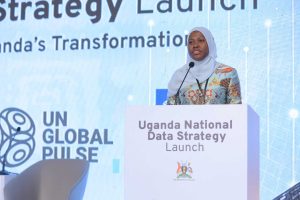
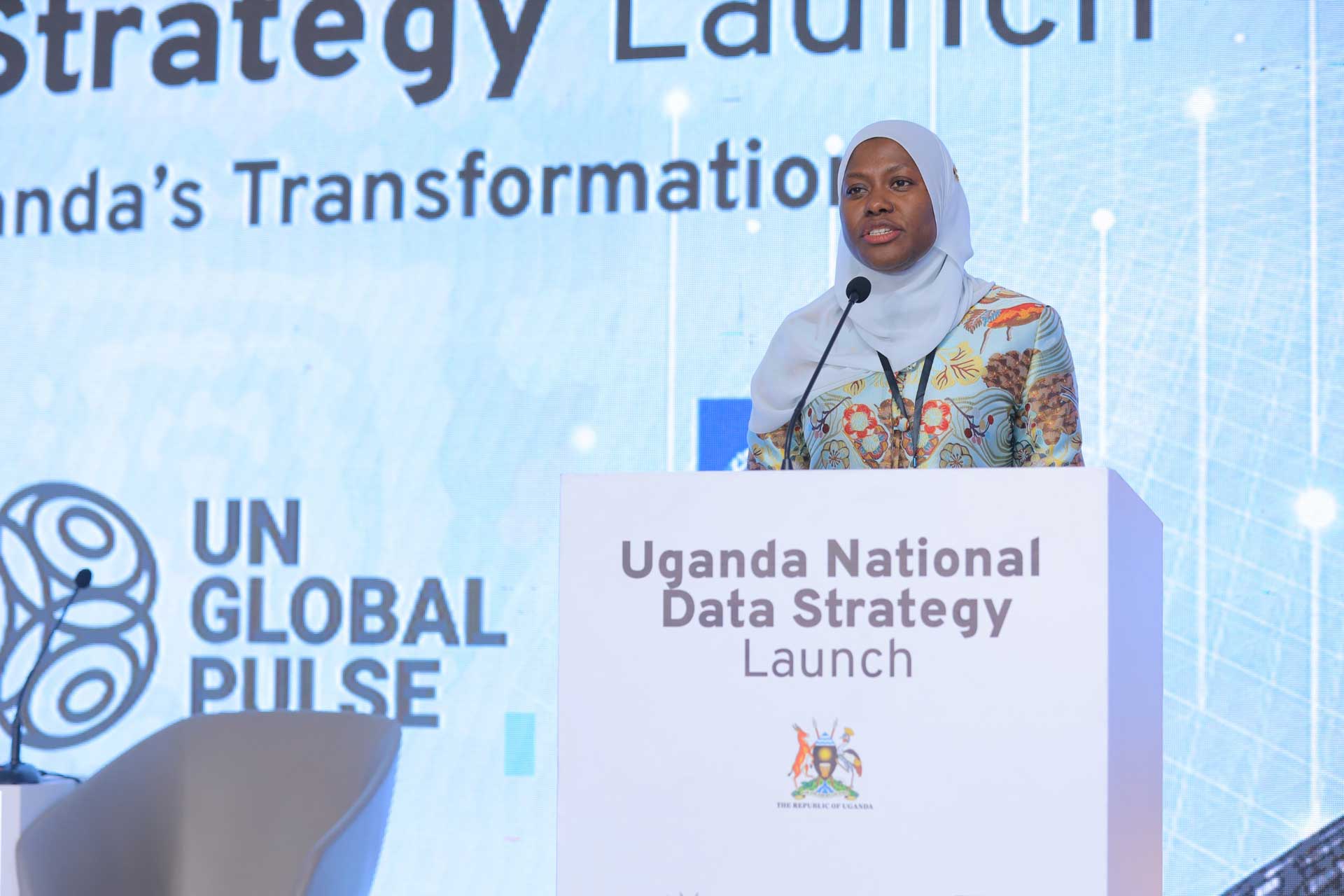
It is a five-year plan to improve how Uganda collects, stores, shares and uses data. The Minister of State for ICT and National Guidance, Joyce Nabbosa Ssebugwawo, launched it in Kampala under the theme “Unlocking the Power of Data for Uganda’s Transformation.” The Government wants better data so it can plan, spend and measure results more accurately.
Why does Uganda need it?
- Gaps in measuring progress. A UNDP official at the launch said only 36% of the indicators in Uganda’s National Development Plan IV currently have data. Without data, it is hard to know whether programmes are working.
- Systems that do not talk to each other. Officials said many government data systems operate independently, which makes sharing information difficult.
- Missing standards and trust. They also pointed to a lack of common standards and limited trust between government and the private sector.
The key numbers
| Item | Amount |
|---|---|
| Total funding sought over five years | Sh1.6 trillion |
| Expected from Government | Sh1.2 trillion |
| From commercialising value-added data services | Sh333.6 billion |
| From development partners | Sh55 billion |
| From the private sector | Sh54 billion |
The report says the money is planned as follows:
| Area | Planned allocation |
|---|---|
| Data infrastructure | Sh684.9 billion |
| Data governance | Sh553 billion |
| Research, innovation and entrepreneurship | Sh319 billion |
| Strategic data utilisation | Sh71.4 billion |
| People and culture | Sh34 billion |
What the strategy aims to deliver
- Better infrastructure: two Tier IV data centres and 99.9% service uptime.
- Better data quality: more than 90% of primary datasets to be free of errors.
- New rules: a national data policy and law, harmonised key registries, and stronger safeguards for personal information.
- Clear oversight: a National Data Steering Committee, chaired by the Ministry of Finance and co-chaired by the Office of the Prime Minister, and a National Data Office inside the ICT ministry for day-to-day delivery.
The plan rests on three pillars: data governance, data infrastructure and strategic data utilisation, supported by people and culture, research, innovation and the ability of systems to work together. It also stresses including women, young people and persons with disabilities.
What it could mean for you
For ordinary citizens
Better data could help local governments see where schools, health facilities and clean water are missing, and plan services accordingly. It also raises a privacy question: more data sharing means personal information must be protected. Officials said Uganda already has a Personal Data Protection Office and that protecting personal information must stay central.
For small businesses
The Minister said reliable data could help businesses understand markets, improve productivity and develop new products. If government data becomes easier to access, small firms could use it to find customers and plan.
For farmers
A government official used agriculture as an example: producing more is not enough if farmers lack access to markets, transport and buyers. Linked data across sectors could help close that gap, and better data could help farmers respond to climate risks.
For students and young people
The strategy calls for more data literacy and research. Skills such as spreadsheets, data analysis and basic statistics will be in demand. Start with free tools and practise on real questions, for example your local market prices.
For AI in Uganda
The ICT ministry’s permanent secretary said reliable data is important for the responsible use of artificial intelligence, as the Government works on a national AI strategy. In simple terms, AI tools are only as good, and as fair, as the data they learn from. This links directly to the AI opportunity study we covered this week.
Questions and cautions
- A strategy is not a law. The plan promises a national data policy and law, but those still have to be written and passed.
- Funding is a big question. Most of the money is expected from Government, so delivery depends on budgets over the next five years.
- Privacy must keep pace. More data sharing needs strong protections and clear rules about who can access what.
- Results matter more than launches. The key test is whether new data systems actually improve services people can feel.
How to protect your own data now
- Share your National ID number and other personal details only when you must, and ask why they are needed.
- Be careful with forms and SMS links that ask for personal information. See our guide to mobile money scams in Uganda.
- Check which apps have access to your contacts, location and photos, and remove permissions you do not need.
What to watch next
- Publication of a national data policy and draft law
- Progress on the national AI strategy
- Whether government datasets are opened up to researchers, startups and the public
Frequently asked questions
How much will the strategy cost?
The Government is looking for about Sh1.6 trillion over five years, with most of it expected from Government itself.
Who will run it?
A National Data Steering Committee will oversee it, and a National Data Office in the ICT ministry will coordinate daily delivery.
Does it include rules to protect my personal data?
The strategy says it will strengthen safeguards for personal information and develop a national data policy and law. Uganda also already has a Personal Data Protection Office.
When was it launched?
It was launched in Kampala on 20 October 2026.
Source
- New Vision, “Uganda launches National Data Strategy”, 20 October 2026


